Mapping Garden Zones for Family, Quiet, and Vegetable Use
Most gardens are asked to do three jobs that pull against each other: absorb the noise and energy of a family, hold a corner where someone can sit without being asked a question, and grow something worth eating. Left undivided, those jobs collide — the football pitch runs through the bean row, the reading bench sits on the shortcut between the back door and the shed.
Dividing a garden into outdoor rooms is less about fences than about mapping: reading the lines people already walk and the views already worth keeping, then giving each activity its own territory. The aim is not to carve every square metre into a separate compartment. It is to make a few clear decisions so that the family can play without apologising, the quiet corner can stay quiet, and the vegetable beds can get the sun and access they need.
A garden map is not a plan for how the garden should look. It is a record of how it is already being used, and a set of decisions about where those uses can be allowed to collide.
Begin by Watching, Not Drawing
Before you sketch anything, spend a fortnight noticing what the garden already does. Most of what you need to know is out there, wearing a path through the grass.
Watch at different times of day, not just at the weekend. A garden that seems perfectly arranged at noon can reveal its real circulation at school pickup, when bags are dropped by the door and bikes are wheeled across the lawn. Note where people pause, where they dump things, and where they turn. The path from the back door to the shed may be the most used route in the garden, even if it is not the prettiest. The corner where the washing line crosses the lawn is a design constraint, not an inconvenience to hide.
Record these on a rough plan:
- The back door everyone actually uses, and the one they don't
- The shortcuts worn across the lawn and the clipped corner of the border
- Where the sun sits at four in the afternoon in June
- Where water stands after heavy rain
- Which windows look out, and at what
- The fixed clutter: tap, bins, washing line, shed, compost
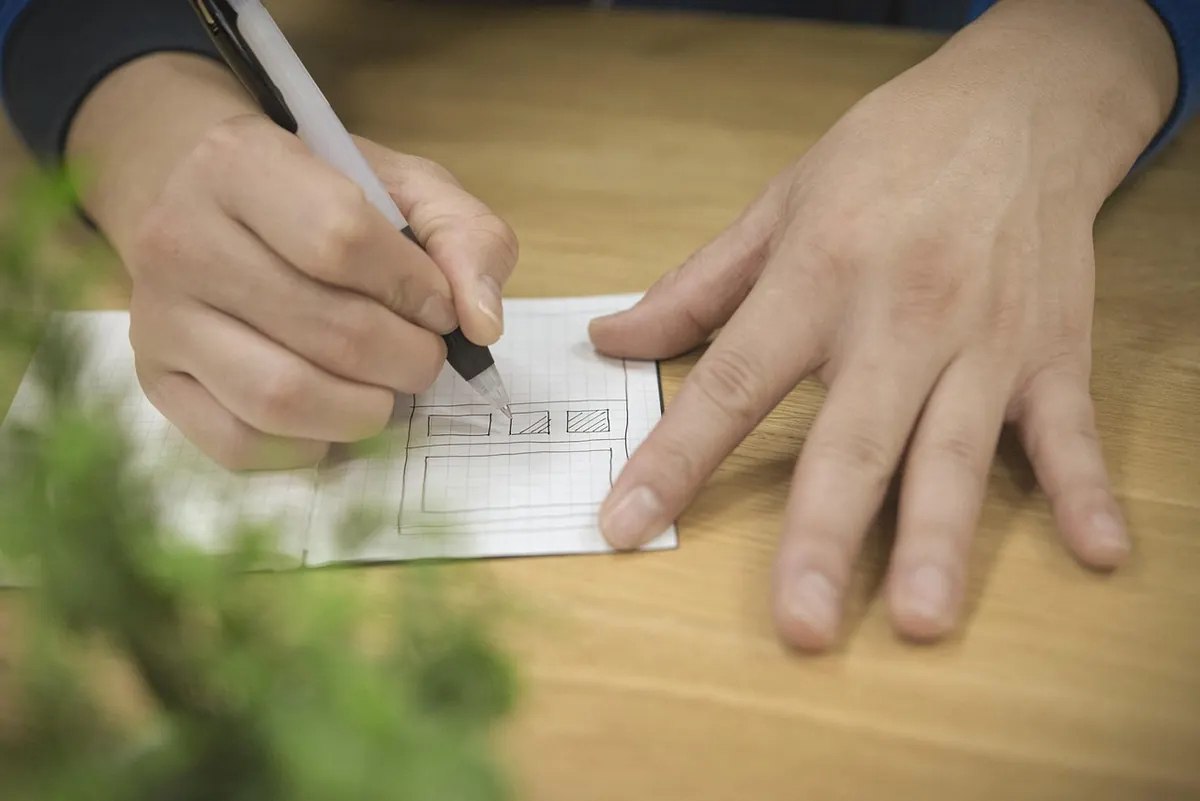
A garden map is not a finished artwork. It is a working document you will scribble on for years.
Use a pencil, not a pen. Mark in one colour the things that cannot move cheaply: drains, mature trees, greenhouse, shed base, boundaries. Mark in another the things that are only there because no one has decided otherwise: a tired bench, a pile of pots, the trampoline that has drifted across the lawn. This separates the fixed from the movable, which is the first real act of design.
Movement Lines Come First
Desire lines are the cheapest design advice available. The worn diagonal across the lawn, the flattened grass at the gate: people have already told you where the paths want to go. Pave those lines, or plan a route that is genuinely more attractive than they are. Fighting them is a full-time job with no ending.
Give routes real widths. Around 60cm is the bare minimum for one person walking comfortably, 90cm feels generous, and 120cm is where two people can pass or a wheelbarrow can turn without a struggle.
Path Widths to Work With
- 60cm: a single-file route to a shed, compost bin, or tucked-away bench.
- 90cm: a comfortable everyday path between beds, borders, or lawn edges.
- 120cm: a route that can take a wheelbarrow, a mower, or two people passing without negotiation.
A path is also a maintenance route. If the compost heap sits at the end of a 45cm gap, you will resent every trip with a bucket. If the hose has to be dragged across a flower bed, the flower bed will lose. Work out the service loop — bins, compost, water, tools, washing — before you fall in love with a planting plan.
Where a path must bend, give it a reason. A path that curves around a fruit tree, a lavender bed, or a change in level feels intentional. A path that wanders for no reason feels like an obstacle course.
Three Zones Are Not Three Boxes
The most common mistake in a small garden is trying to make three fenced compartments. A family lawn, a quiet bench, and a vegetable bed do not need walls. They need edges that do different jobs: a hedge that softens noise, a strip of herbs that marks a change of use, a trellis that screens a working area without hiding it completely.
Think in terms of territory and sightline. The family zone should be visible from the kitchen so that small children are not out of view. The quiet zone should be screened from the family zone so that sitting down does not feel like sitting in the middle of a game. The vegetable zone should be easy to reach with a trug, a hose, and a wheelbarrow. Those requirements can be met with planting, a change of surface, a low hedge, a trellis, or a shed wall. A low hedge between the lawn and the bench may do more than a fence, because it filters movement without making the garden feel smaller.
Good zones overlap at their edges: herbs near the kitchen door, pickable berries along the route to the compost, a bench that looks over the vegetable beds without sitting in the middle of them. The point is not separation for its own sake. It is to let each activity have a place where it can be done properly.
Give the Family a Zone That Can Take a Hit
Family space is often the hardest to place because it is noisy, mobile, and not always tidy. Put it where the noise will be least annoying, but do not automatically banish it to the far end if that is the only sunny spot for vegetables. A lawn that takes football, cricket, trampolining, and running laps needs a durable surface, a boundary that stops balls, and a sightline from the house.
What Family Space Actually Needs
- A durable surface: lawn, bark, or a hard area that can survive scuffs and muddy boots.
- Storage near the exit: balls, bats, scooters, and chalk in one place, not scattered across the quiet zone.
- A sightline from the house: especially important for younger children and for knowing when to call everyone in.
- A boundary that absorbs mistakes: a hedge, net, or fence that stops stray shots before they reach the greenhouse.
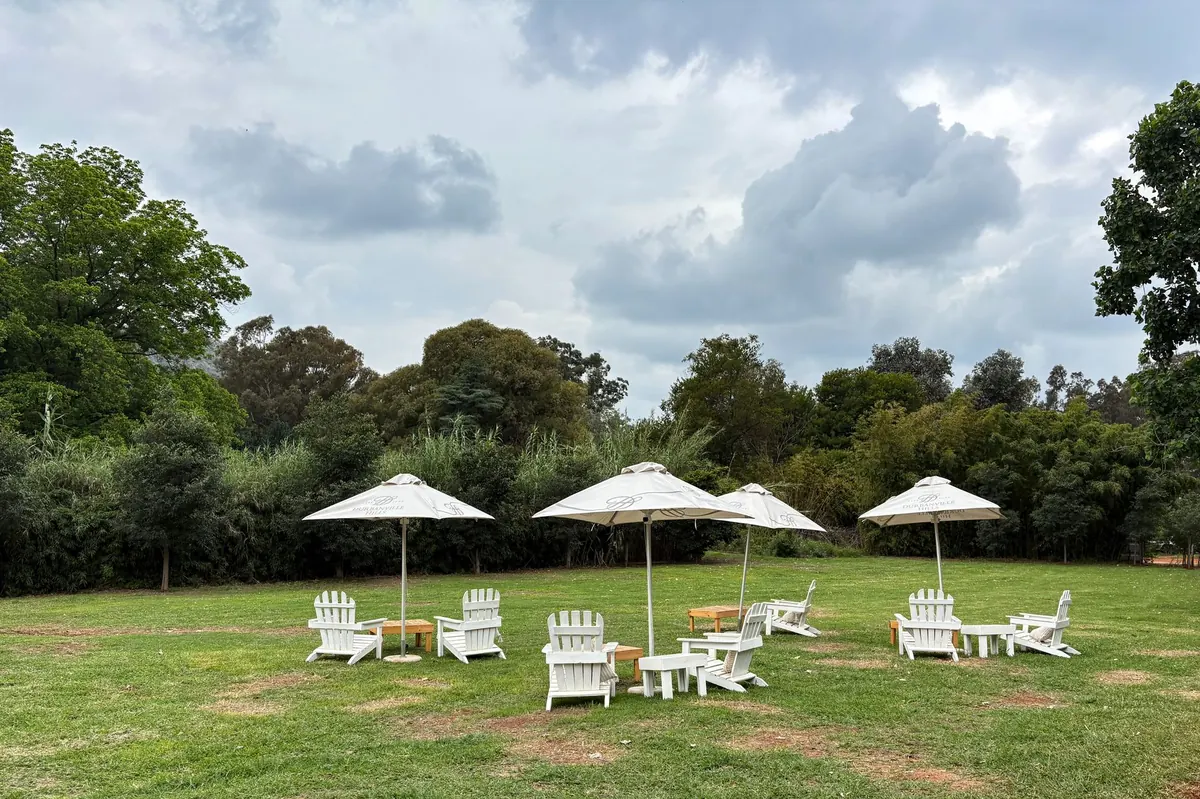
- A little shade: a tree, parasol, or sail that makes the zone usable on hot afternoons.
If a goal sits at the end of the lawn, turn it so that misdirected shots hit a hedge or net rather than a cold frame. Keep a narrow hard strip for scooters and bikes if the lawn is the main route through the garden. Store balls near the door so that the family zone is easy to start and easy to tidy. A family zone does not have to be a trampoline park. It can be a stretch of lawn with a goal, a swing, and a place for adults to sit while keeping an eye on things.
Make the Quiet Zone Quiet on Purpose
A quiet corner is not simply the bit left over after the lawn and the vegetables have been placed. It needs enclosure, a reason to sit, and protection from the main route. The best quiet spots often have something at the back — a wall, a hedge, a shed, a tall planter — and a view out. Sitting with your back to a boundary and looking across the garden feels more restful than sitting in the open with your back to the house.
Place the quiet zone off the desire line. A bench on the shortcut between the back door and the shed will be visited by everyone and used by no one. Move it two metres sideways, behind a low planting, and it becomes a destination. A small nook of 1.5m by 1.5m can be enough for a chair, a side table, and a pot. Add sound masking: grasses that rustle, a small water bowl, a hedge that filters road noise. Do not put the compost heap directly behind the bench, however good the view.
Quiet Zone Checklist
- Off the main route, but not so hidden that it feels abandoned.
- A back to the bench: hedge, wall, shed, or tall planting.
- A view worth sitting for: a border, a tree, a pot, or the vegetable beds.
- Afternoon shade or morning sun, depending on when you actually sit.
- Something to put a cup on, and somewhere to put a book down.
Put the Vegetable Zone Where It Wants to Be
Vegetables are often banished to the shaded end of the garden because they are considered untidy. Most vegetables need at least six hours of direct sun, reliable water, and easy access. A bed that is out of sight but in deep shade will grow disappointment. Put the vegetable zone in the sunniest practical place, even if that means it is visible from the kitchen. A well-kept potager is not an eyesore; it is a working part of the garden.
Beds should be no wider than about 1.2m so that you can reach the middle from either side without stepping on the soil. Paths between beds need to be wide enough for a wheelbarrow or a kneeling stool. Keep the compost heap and water butt close, but not so close that they dominate the seating area. If the only sunny spot is a patio, grow in containers, raised beds, or a compact salad garden. If the soil is poor, build up rather than dig down.
Vegetable Zone Essentials
- Sun: six hours minimum for most crops; more for tomatoes, beans, and squash.
- Water: a butt, tap, or hose reachable without dragging through the quiet zone.
- Access: paths wide enough for a trug, a barrow, and a kneeling stool.
- Wind protection: a hedge or fence that stops beans being shredded.
- Rotation: room to move crops around, even if it is only a simple three-bed system.
Use Edges as Buffers
Edges do the quiet work of zoning. A low hedge between lawn and bench absorbs the sense of movement. A trellis with climbing beans screens the compost without hiding it completely. A strip of lavender, thyme, or chives marks the change from play to pause. A mown path through longer grass creates a soft boundary that a fence cannot match. Even a change in paving — from grass to gravel to brick — tells people they are entering a different kind of space.
Use edges to solve specific problems. If balls keep rolling into the vegetable beds, plant a tolerant low hedge or set a net on the family side. If the quiet bench feels exposed, add a tall planter at one end rather than building a screen across the whole garden. If the vegetable garden looks messy from the house, edge it with herbs and cut flowers so that the first view is productive rather than chaotic.
Plan for Overlap and Seasons
Zones are not fixed. In summer, the family zone may need the most space; in winter, the quiet bench may be the only place worth sitting. The vegetable beds are bare for months, so give the zone structure: raised beds, a fruit cage, a shed, a path layout that still looks deliberate in January. The quiet zone needs winter interest — evergreens, bark, a warm-coloured pot — or it will be abandoned exactly when a quiet corner is most useful.
Overlap is useful. A bench at the edge of the vegetable plot gives you somewhere to sit after weeding. A pickable hedge of currants or blueberries along the family lawn lets children graze without trampling the beds. A herb strip near the kitchen door is both practical and a soft edge between house and garden. The aim is not to keep activities apart at all costs, but to stop them from ruining
Photo: Magda Ehlers / Pexels